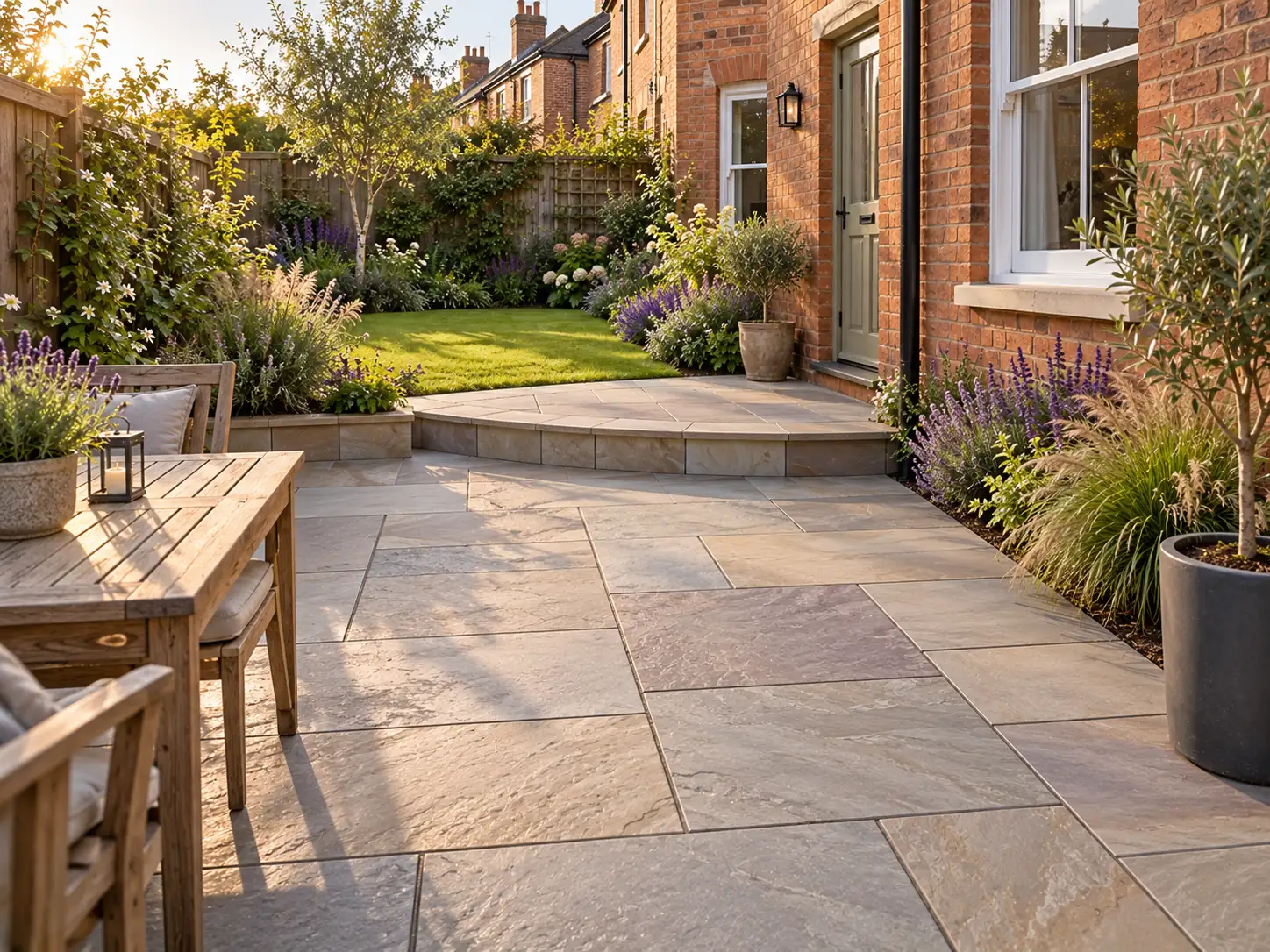
Natural stone patios
Natural stone patios: sandstone, limestone and how they compare
The character of real stone, the care it asks for in return, and a plain side-by-side with porcelain and block paving.
Indian sandstone
Indian sandstone is the most widely laid natural stone in British gardens. Shades run from soft greys with a lilac hint to buffs, browns and warm pinks, and the riven surface means no two slabs match. That texture gives good grip underfoot. The trade-off is that sandstone is porous: it soaks up rain, can turn green in shade and may pick up marks from rusty furniture or fallen leaves. It is usually sold as a mixed-size pack and laid in a random pattern, which suits cottage planting and older brick houses alike.
Limestone
Limestone is generally smoother and more even in colour, with blue-blacks, greys and soft creams that suit a modern house. It comes sawn, honed or tumbled, each giving a different finish. It reacts with acids, so spilt wine or lemon juice can etch the surface, and very smooth finishes lose grip when wet. Many owners choose to seal it. Like sandstone, it needs a proper base and a full mortar bed to last.
To seal or not to seal
A good impregnating sealer makes natural stone easier to keep clean and slows staining, but it can darken the colour slightly and needs renewing every few years. Sealing too soon traps moisture, so stone is normally left to dry out thoroughly after laying before any sealer goes on.
Block paving as a patio
Concrete blocks are better known on driveways, but they make a practical patio too. They are laid on a compacted sand bed rather than mortar, with kiln-dried sand brushed into the joints, so a section can come up and go back down if the ground ever settles. The look is plainer than stone, though tumbled and textured blocks soften it.
Side by side
| Porcelain | Indian sandstone | Limestone | Concrete block | |
|---|---|---|---|---|
| Look | Uniform, crisp, wide choice | Varied, riven, traditional | Smooth, even, modern | Plain, practical |
| Upkeep | Low | Moderate, often sealed | Moderate, often sealed | Low to moderate |
| Grip when wet | Depends on the finish | Good when riven | Lower when smooth | Generally good |
| Staining | Very resistant | Can stain | Can stain, especially from acids | Moderate |
| Relative cost to lay | Higher | Middle | Middle to higher | Lower |
A general guide only; individual products vary, so check the details of any slab you are considering.
Questions people ask
Which stone is easiest to look after?
Among natural stones, a sealed sandstone in a mid tone hides dirt well. Overall, porcelain needs the least care.
Will sandstone go green?
In shade it often does. A gentle scrub each spring keeps it under control, and good drainage helps.
Can different materials be mixed?
Yes. A porcelain patio with a sandstone step, or a stone patio edged in setts, can look very good, provided each part is laid in the way its material needs.
Drawn to natural stone?
Tell us which stone appeals and roughly how much ground it would cover, then ask for a free written quote.