Porcelain patios
Porcelain patios: sharp to look at, easy to live with, fussy to lay
Why porcelain has become the most asked-about patio surface, what it needs underneath to last, and the downsides worth knowing first.
Why people choose porcelain
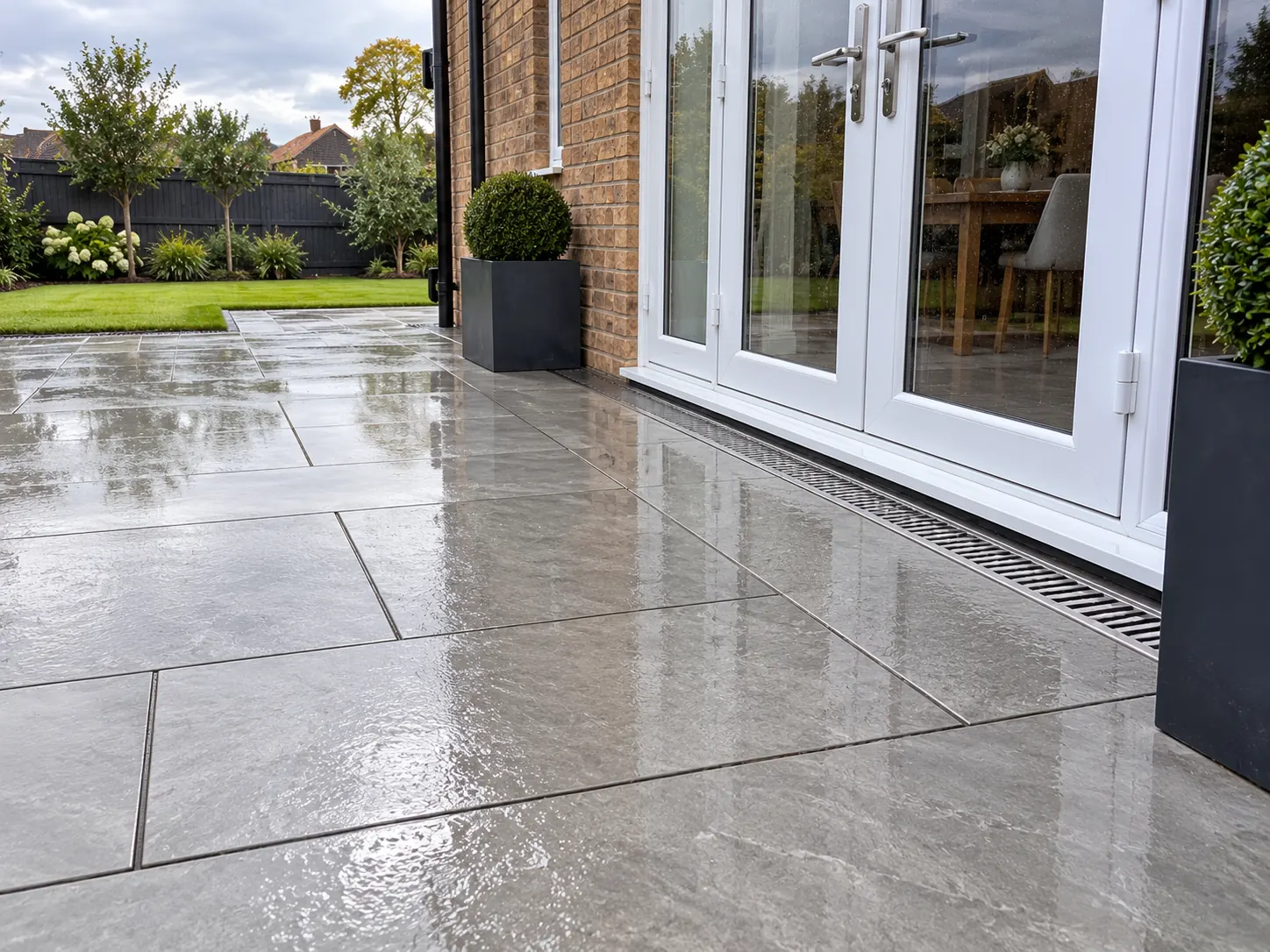
Outdoor porcelain is clay fired at very high temperature and pressed into thin, dense slabs, usually 20mm thick. It takes in almost no water, so red wine, barbecue fat and fallen leaves wipe away instead of soaking in. The colour holds in strong sun, the edges are crisp, and the range of finishes is wide: stone effects, slate looks, concrete greys and even timber-style planks. In a small garden that needs to look tidy all year with little effort, it is hard to beat.
Choosing a slab
- Size. 600 by 600mm and 900 by 600mm are the everyday formats. Long planks such as 1200 by 600mm look striking but need a flatter base and more careful handling.
- Colour. Warm greys and soft beiges sit comfortably beside the buff and brown brick found on many Peterborough homes. Very dark slabs show dust and get hot in full sun.
- Grip. Outdoor porcelain is usually sold with a slip rating, often given as an R number. R11 is a common outdoor grade; ask to see the rating rather than judging by touch in a showroom.
- Spares. Order a few extra slabs from the same batch, because ranges change and a matching replacement can be hard to find later.
What porcelain needs to stay put
Porcelain’s density is also its weak point when laying. Mortar cannot grip the smooth back on its own, so every slab needs a slurry primer brushed on just before it goes down, and then a full wet mortar bed of 30 to 40mm with no voids. Marshalls’ guidance is clear that porcelain should never be laid on spots of mortar. Cutting needs a diamond blade and a steady hand, and the slim joints of 3 to 5mm are usually filled with a compound made for porcelain rather than sand and cement. Miss any of these steps and the result is slabs that ring hollow when tapped, then loosen.
The downsides, honestly
- It costs more to lay than concrete flags, because of the primer, the cutting and the slower bedding.
- A chipped edge is hard to hide, and a cracked slab is awkward to replace if the range has gone.
- Some smooth finishes are slippery when wet or icy, so the slip rating matters.
- Dark colours can be uncomfortable underfoot on a hot day.
- Moss can still settle in shady joints, even though the slabs themselves stay clean.
Looking after a porcelain patio
A sweep and a wash with warm water and a mild detergent cover most of it. A stiff brush deals with algae in shady corners. Porcelain does not normally need sealing, but the joints are worth checking each spring and topping up where needed.
Questions people ask
Is porcelain slippery in the rain?
It depends on the finish. Textured outdoor slabs are made for grip, so check the stated slip rating before you choose.
Does porcelain need sealing?
Generally not, because it absorbs so little water. Keeping the joints in good order matters more.
Can porcelain go over an old concrete patio?
Only if the old base is sound, level enough and drains properly. That is worth checking before anything is decided.
Like the look of porcelain?
Give a rough size and the finish you like, then request a free written quote. No obligation.